Mechatronics Engineering

About the Department
Established in 2013 at Akshaya College of Engineering and Technology, the Department of Mechatronics offers a four-year B.E. degree programme with an intake of 30 students. The department has also been recognized as a Research Centre for conducting Ph.D. programmes under Anna University. The department provides an integrated curriculum that encompasses the fundamentals of electrical engineering, electronics, computer science, mechanics, robotics, and modern courses. The department aims to produce highly skilled professionals in Mechatronics Engineering who are prepared to tackle real-world challenges and contribute to technological advancements. The strength of the Mechatronics Engineering programme lies in three principles: providing students with an innovative and excellent curriculum meeting international quality standards, continuous improvement of the curriculum to meet stakeholders' needs, and having outstanding faculty members from various professional and academic backgrounds.
Vision
Developing competent Mechatronics Engineers with a focus on employability, research capability, entrepreneurship and human values.
Mission
- DM 1 : Bridge the gap between academia and industry to boost employability and job readiness
- DM 2 : Encourage research-led education with a focus on current technological advancements and societal needs.
- DM 3 : Inspire entrepreneurial initiatives through exposure to design thinking, product development, and commercialization.
- DM 4 : Embed human values and professionalism to nurture socially conscious and ethically strong engineers.
- PEO1 : The graduates will be able to apply Mechatronics systems and components to promote automation as per the needs of industry and society.
- PEO2 :The graduates will be able to pursue higher studies with a specific interest towards research and innovation in Mechatronics and allied areas.
- PEO3 : The graduates will be able to nurture ethical values and generate employment for the social and economic development.
- PO 1: Engineering knowledge: Apply the knowledge of mathematics, science, engineering fundamentals, and an engineering specialization to the solution of complex engineering problems.
- PO 2: Problem analysis: Identify, formulate, review research literature, and analyze complex engineering problems reaching substantiated conclusions using first principles of mathematics, natural sciences, and engineering sciences.
- PO3 : Design/development of solutions: Design solutions for complex engineering problems and design system components or processes that meet the specified needs with appropriate consideration for the public health and safety, and the cultural, societal, and environmental considerations
- PO 4 : Conduct investigations of complex problems: Use research-based knowledge and research methods including design of experiments, analysis and interpretation of data, and synthesis of the information to provide valid conclusions.
- PO 5 : Modern tool usage: Create, select, and apply appropriate techniques, resources, and modern engineering and IT tools including prediction and modeling to complex engineering activities with an understanding of the limitations.
- PO 6 : The Engineer and Society: Apply reasoning informed by the contextual knowledge to assess societal, health, safety, legal and cultural issues and the consequent responsibilities relevant to the professional engineering practice.
- PO 7 : Environment and Sustainability: Understand the impact of the professional engineering solutions in societal and environmental contexts, and demonstrate the knowledge of, and need for sustainable development.
- PO 8 : Ethics: Apply ethical principles and commit to professional ethics and responsibilities and norms of the engineering practice.
- PO 9 : Individual and Team work: Function effectively as an individual, and as a member or leader in diverse teams, and in multidisciplinary settings.
- PO 10 : Communication: Communicate effectively on complex engineering activities with the engineering community and with society at large, such as, being able to comprehend and write effective reports and design documentation, make effective presentations, and give and receive clear instructions.
- PO 11 : Project management and Finance: Demonstrate knowledge and understanding of the engineering and management principles and apply these to one’s own work, as a member and leader in a team, to manage projects and in multidisciplinary environments.
- PO 12 : Life-long learning: Recognize the need for, and have the preparation and ability to engage in independent and life-long learning in the broadest context of technological change.
- PS O1 : Professional skills: Students shall have skills and knowledge in mechatronics domains like robotics, electronics, computer science, telecommunication, systems, controls and product engineering for innovative products incubation.
- PS O2 : Competency: Students shall qualify at the State, National and International level competitive examination for employment, higher studies and research.


















Head Of The Department (HOD)


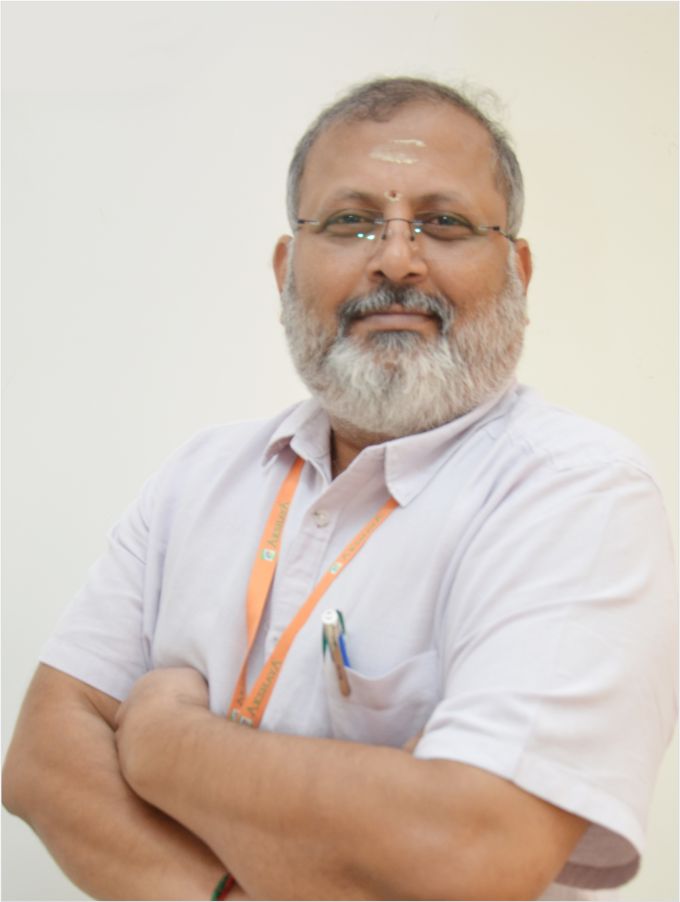
Dr. P.Ravikumar
-
DesignationProfessor & Head
-
Educational QualificationPh.D.
-
Teaching Experience20 Years
-
Email Idravikumar@acetcbe.edu.in
Faculty Profile