Electronics & Communication Engineering
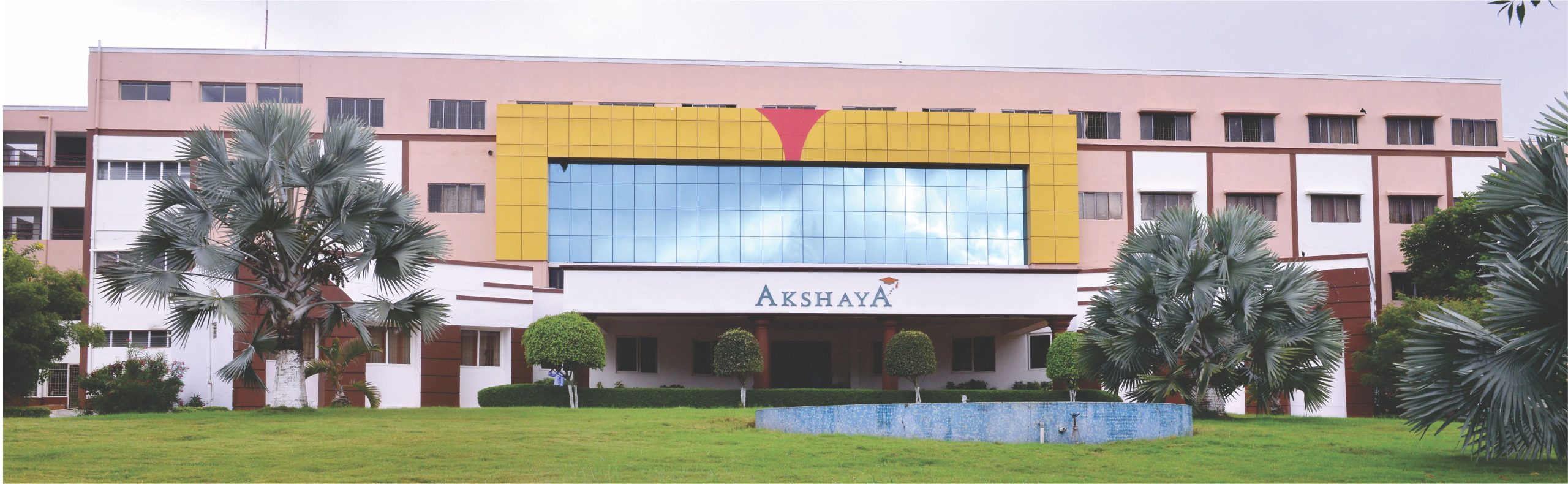
Established in 2009, the Department of Electronics and Communication Engineering (ECE) at Akshaya College of Engineering and Technology, Coimbatore, is an Autonomous Institution, NBA-accredited (2024), AICTE-approved department affiliated with Anna University, Chennai and a recognised Anna University PhD Research Centre. Offering a B.E. in Electronics and Communication Engineering (intake: 90) the department is one of Tamil Nadu's most credentialed ECE departments with a 15-year legacy of academic excellence.
Autonomous · NBA Accredited · PhD Research Centre a rare combination
The ECE department at Akshaya College is uniquely positioned with concurrent distinctions Autonomous Institution status, NBA accreditation, Anna University PhD Research Centre recognition. Very few ECE departments in Tamil Nadu hold all simultaneously, making this one of the strongest academic environments for electronics and communication engineering in the region.
B.E. Electronics and Communication Engineering
The four-year B.E. ECE programme offers an autonomously designed, industry-aligned curriculum covering Circuit Theory, Electronic Devices, Digital Electronics, Signals and Systems, Communication Systems, Microprocessors & Microcontrollers, Embedded Systems, VLSI design, Wireless Communications, Antenna Theory, Optical Fibre Communication and IoT systems. With autonomous status, the curriculum is continuously updated to reflect emerging areas including AI-integrated signal processing.
Anna University Ph.D. Research Centre (since 2017)
As a recognised Anna University PhD Research Centre, the department enables faculty and eligible candidates to conduct doctoral research in VLSI, embedded systems, wireless communications, signal processing, and photonics creating a research-enriched environment that benefits both postgraduate and undergraduate students through faculty-led projects and cutting-edge lab activities.
Advanced Laboratories and infrastructure
The department is equipped with state-of-the-art laboratories supporting hands-on learning and active research, including the VLSI Design Lab, Communication Systems Lab, Embedded Systems Lab, Digital Signal Processing Lab, Electronic devices and circuit Lab, Networks and security lab providing students with practical exposure to industry-standard tools and equipment.
Career outcomes after B.E. ECE
B.E. ECE graduates pursue careers as Electronics Engineer, Embedded Systems Engineer, RF Engineer, Network Engineer, Signal Processing Engineer, and IoT Developer at companies including Qualcomm, Tessolve semiconductors Pvt Ltd. Bangalore, Accenture, SmartDV technologies pvt.Ltd, Bangalore, etc…
Vision
Emerge as eminent Centre of learning in Electronics and Communication Engineering to produce engineers, capable of meeting the global challenges through design, development and research, for the welfare of the society and humanity.
Mission
- DM 1 : Adopt a systematic and technology enabled teaching-learning process with an ability to contribute for research.
- DM 2 : Develop electronics and communication engineers with managerial skills and life-long learning practices, for sustainable economic growth, beneficial to the society.
- DM 3 : Establish Centre of excellence in VLSI technologies and Embedded systems and provide a creative environment with industry linked initiatives for encouraging innovation.
- PEO 1 : The graduates will have successful careers in industries or pursue higher studies and research or emerge as entrepreneurs.
- PEO 2 : The graduates will be able to apply fundamental and advanced knowledge, skills and techniques in devising innovative products for the benefits of society.
- PEO 3 : The graduates will be able to critically analyze existing literature in an area of specialization and research oriented methodologies to solve the problems identified.
- PO 1 : Engineering knowledge: Apply the knowledge of mathematics, science, engineering fundamentals, and an engineering specialization to the solution of complex engineering problems.
- PO 2 : Problem analysis: Identify, formulate, review research literature, and analyze complex engineering problems reaching substantiated conclusions using first principles of mathematics, natural sciences, and engineering sciences.
- PO 3 : Design/development of solutions: Design solutions for complex engineering problems and design system components or processes that meet the specified needs with appropriate consideration for the public health and safety, and the cultural, societal, and environmental considerations
- PO 4 : Conduct investigations of complex problems: Use research-based knowledge and research methods including design of experiments, analysis and interpretation of data, and synthesis of the information to provide valid conclusions.
- PO 5 : Modern tool usage: Create, select, and apply appropriate techniques, resources, and modern engineering and IT tools including prediction and modeling to complex engineering activities with an understanding of the limitations.
- PO 6 : The Engineer and Society: Apply reasoning informed by the contextual knowledge to assess societal, health, safety, legal and cultural issues and the consequent responsibilities relevant to the professional engineering practice.
- PO 7 : Environment and Sustainability: Understand the impact of the professional engineering solutions in societal and environmental contexts, and demonstrate the knowledge of, and need for sustainable development.
- PO 8 : Ethics: Apply ethical principles and commit to professional ethics and responsibilities and norms of the engineering practice.
- PO 9 : Individual and Team work: Function effectively as an individual, and as a member or leader in diverse teams, and in multidisciplinary settings.
- PO 10 : Communication: Communicate effectively on complex engineering activities with the engineering community and with society at large, such as, being able to comprehend and write effective reports and design documentation, make effective presentations, and give and receive clear instructions.
- PO 11 : Project management and Finance: Demonstrate knowledge and understanding of the engineering and management principles and apply these to one’s own work, as a member and leader in a team, to manage projects and in multidisciplinary environments.
- PO 12 : Life-long learning: Recognize the need for, and have the preparation and ability to engage in independent and life-long learning in the broadest context of technological change.
- PSO 1: Professional skills: Students shall have skills and knowledge to work on analog and digital systems, adhoc and sensor networks, VLSI, embedded and communication systems
- PSO 2: Competency: Students shall qualify at the State, National and International level competitive examination for employment, higher studies and research.


















Head Of The Department (HOD)
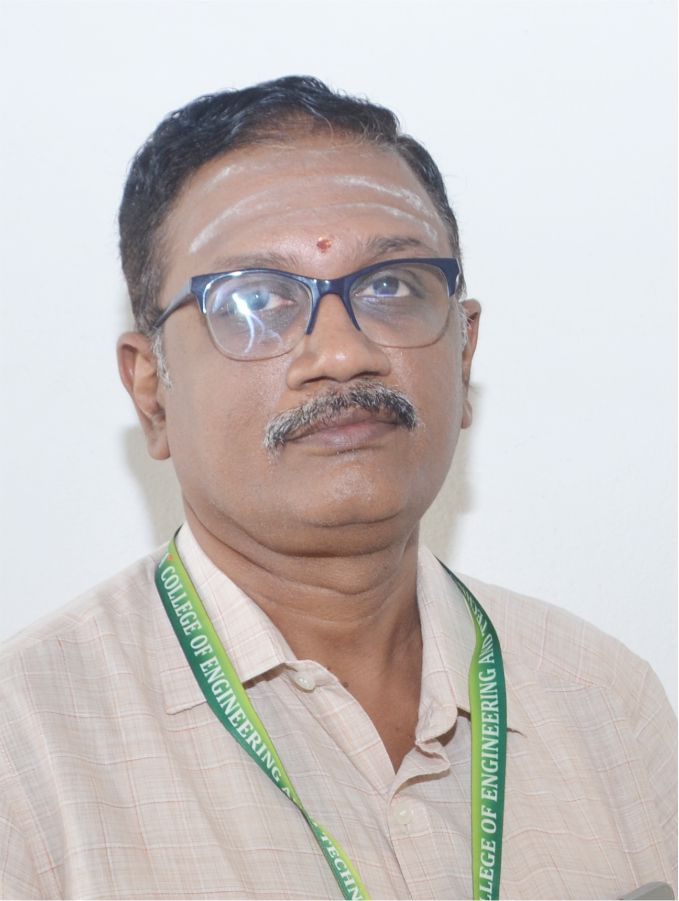

Dr. B. Kishore
-
DesignationProfessor & HoD
-
Educational QualificationM.E., Ph.D.,
-
Teaching Experience24 Years
-
Email Idkishoreb@acetcbe.edu.in
Faculty Profile