Artificial Intelligence and Data Science
Akshaya College of Engineering and Technology, Coimbatore, is an autonomous institution offering an AICTE-approved B.Tech programme in Artificial Intelligence and Data Science (AI&DS). This flagship programme is designed for students aspiring to build careers in Machine Learning, Deep Learning, Data Analytics, and Intelligent Systems.
Affiliated with Anna University, Chennai, the programme emphasizes strong theoretical foundations combined with practical exposure. The department admits 60 students annually and is committed to nurturing innovation, research, and industry-ready skills in one of Tamil Nadu’s most dynamic AI programmes.
Why Choose an Autonomous Institution for AI & Data Science?Curriculum
As an autonomous institution, Akshaya College has the flexibility to design and update its curriculum regularly. This enables faster integration of emerging technologies such as Generative AI, Large Language Models, Cloud Computing, and Real-time Analytics into the B.Tech AI&DS programme, without waiting for university-wide revisions.
Programme Highlights
High-speed digital campus: Dedicated 300 Mbps internet with a 1:1 ratio, enabling seamless access to Cloud platforms, AI tools, and global e-learning resources.
Admissions Open B.Tech AI&DS 2026–27
Secure your seat in one of Tamil Nadu’s leading autonomous engineering programmes. With a limited intake of 60 students, early application is highly recommended. Apply now at Akshaya College of Engineering and Technology, Coimbatore.
Vision
To revolutionize the quality of AI technology by creating a state-of-the-art environment where innovation, sustainability, and social impact converge.
Mission
- DM 1 : To develop and implement AI solutions that prioritize human values, ethics and social responsibilities.
- DM 2 : To provide cutting-edge AI research, driving innovation and advancing the state-of-the-art in AI technology.
- DM 3 : To provide industrial standards by means of collaborations for artificial intelligence and data science.
- DM 4 :To provide an excellent infrastructure that keeps up with modern trends and technologies for professional entrepreneurship.
- PEO 1 : Apply the knowledge of basic sciences, mathematics, Artificial Intelligence, data science and statistics to build a system that requires in analysis of huge volumes of data.
- PEO 2 : Product Development:Design a model using Artificial Intelligence to solve the critical problems in real world.
- PEO 3 : Higher Studies: To enable the students to think logically and pursue life-long learning and collaborate with an ethical attitude in a multidisciplinary team.
- PO 1 : Engineering knowledge: Apply the knowledge of mathematics, science, engineering fundamentals, and an engineering specialization to the solution of complex engineering problems.
- PO 2 : Problem analysis: Identify, formulate, review research literature, and analyze complex engineering problems reaching substantiated conclusions using first principles of mathematics, natural sciences, and engineering sciences.
- PO 3 : Design/development of solutions: Design solutions for complex engineering problems and design system components or processes that meet the specified needs with appropriate consideration for the public health and
safety, and the cultural, societal, and environmental considerations - PO 4 : Conduct investigations of complex problems: Use research-based knowledge and research methods including design of experiments, analysis and interpretation of data, and synthesis of the information to provide valid
conclusions. - PO 5 : Modern tool usage: Create, select, and apply appropriate techniques, resources, and modern engineering
and IT tools including prediction and modeling to complex engineering activities with an understanding of the limitations. - PO 6 : The Engineer and Society: Apply reasoning informed by the contextual knowledge to assess societal,
health, safety, legal and cultural issues and the consequent responsibilities relevant to the professional engineering practice. - PO 7 : Environment and Sustainability: Understand the impact of the professional engineering solutions in societal and environmental contexts, and demonstrate the knowledge of, and need for sustainable development.
- PO 8 : Ethics: Apply ethical principles and commit to professional ethics and responsibilities and norms of the engineering practice.
- PO 9 : Individual and Team work: Function effectively as an individual, and as a member or leader in diverse teams, and in multidisciplinary settings.
- PO 10 : Communication: Communicate effectively on complex engineering activities with the engineering community and with society at large, such as, being able to comprehend and write effective reports and design documentation, make effective presentations, and give and receive clear instructions.
- PO 11 : Project management and Finance: Demonstrate knowledge and understanding of the engineering and management principles and apply these to one’s own work, as a member and leader in a team, to manage projects and in multidisciplinary environments.
- PO 12 : Life-long learning: Recognize the need for, and have the preparation and ability to engage in independent and life-long learning in the broadest context of technological change.
- PSO 1 :Create, select and apply the knowledge of AI and Data Science to solve societal problems.
- PSO 2 : Develop data analytics and data visualization skills, skills pertaining to knowledge acquisition, knowledge representation and knowledge engineering, and hence be capable of coordinating complex projects.


















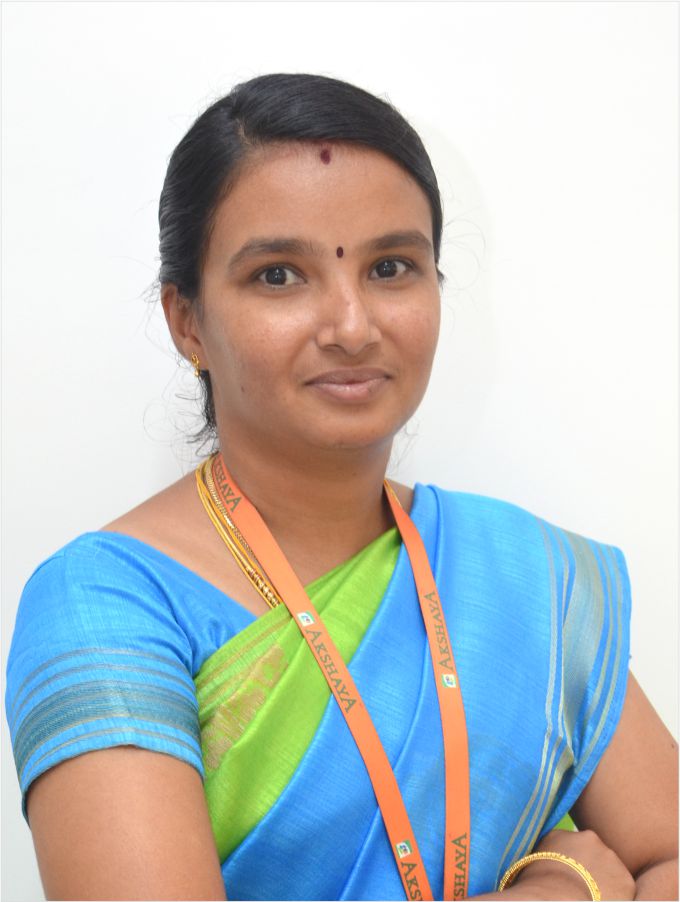
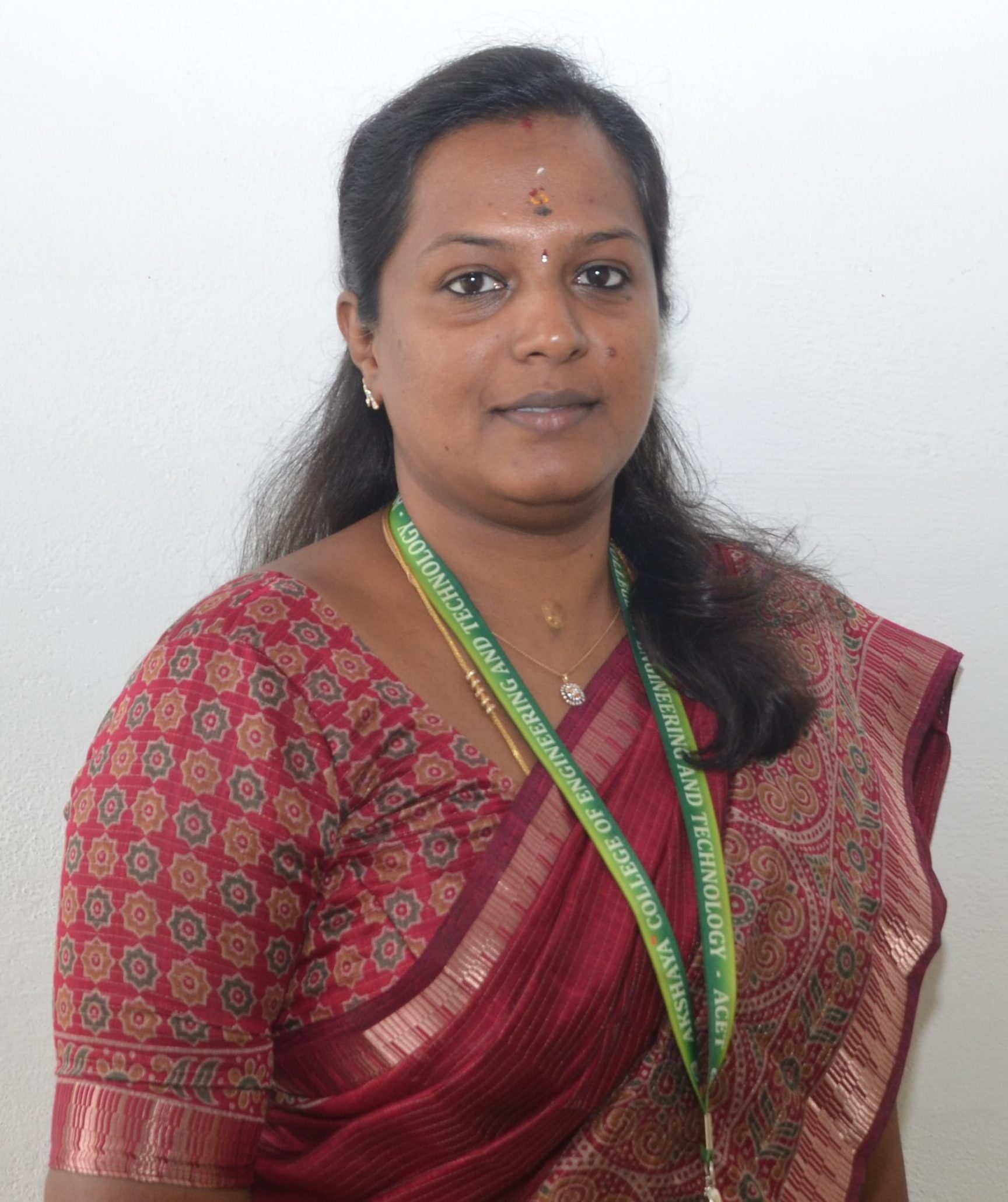
Head Of The Department (HOD)


Dr.M.Jenifer
-
DesignationAssociate Professor & HoD
-
Educational QualificationM.E., Ph.D.,
-
Teaching Experience12 Years
-
Email Idjeniferm@acetcbe.edu.in
Faculty Profile